Every moving season we get the same wave of calls: a freshly relocated washer roaring like a jet, a dryer taking three cycles in its new laundry room, a slow puddle spreading from behind a machine that "worked fine at the old place." Nearly all of it traces to four hookup mistakes — all preventable in under an hour.
Mistake one: leaving the transit bolts in (or never installing them)
Front-loaders ship with bolts that lock the drum for transport. Run the machine with them in, and the suspension can't do its job — the whole unit slams and walks, and a few loads can damage the shocks permanently. The reverse mistake matters too: moving a front-loader without the bolts lets the drum punish its own bearings over every pothole on I-5. Bolts out before the first wash, bolts in before the next move — tape them inside the detergent drawer so they survive the years between.
Mistake two: reusing decade-old fill hoses
Rubber fill hoses age from the inside, and the flex of a move is exactly what a tired hose doesn't need. A burst fill hose runs at full house pressure until someone finds it — the single ugliest water event a laundry room can produce. New braided stainless hoses cost less than a pizza night; put them on at move-in and check that both valves turn freely while you're back there.
Mistake three: draining into the wrong-height standpipe
Portland's older bungalows and their basement laundry corners are full of improvised plumbing. A drain hose shoved too deep into a standpipe can siphon the tub as it fills; a standpipe that's too short lets suds and water surge back out. The hose wants a high loop, a loose fit, and a standpipe tall enough to stay ahead of the pump. If your new basement offers only a utility sink, clip the hose properly — the flood stories usually start with "it was just resting there."
Mistake four: crushing the dryer vent behind the machine
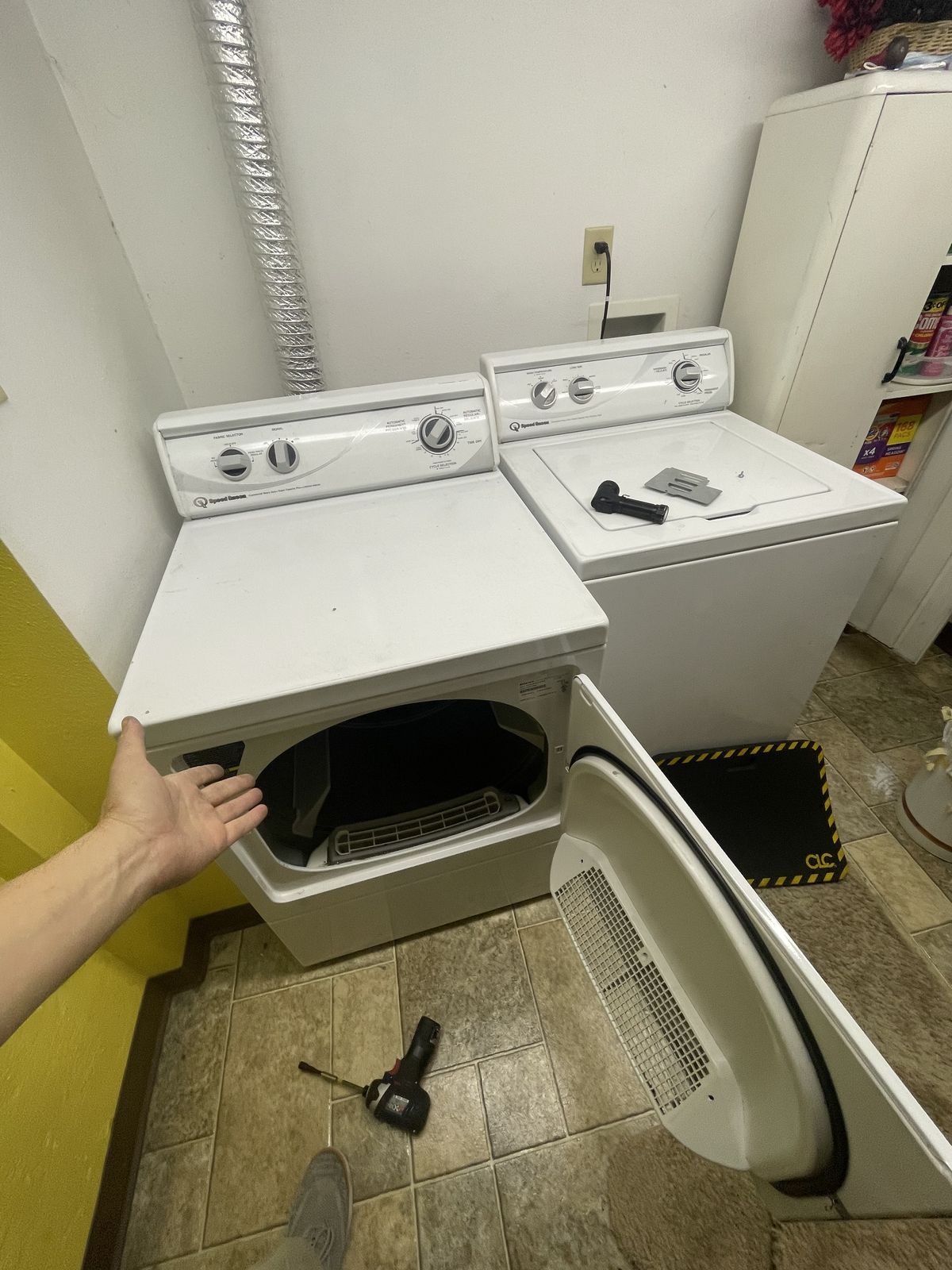
Push the dryer flush against the wall and the foil transition hose accordions flat — instant airflow restriction, longer cycles, hotter cabinet, lint packing where you can't see it. Leave the machine a hand's width out, use a rigid or semi-rigid transition instead of bargain foil, and confirm the outside flap actually flutters when the dryer runs. Gas dryers add one more line to the checklist: the flexible gas connector and a proper leak check — that connection is worth a professional's five minutes, not a guess.
The fifteen-minute proving run
Before the first real load: run the washer empty on a short hot cycle and watch the connections the whole time; then run the dryer on air-dry and feel for real airflow at the outside vent. Level both machines so a glass of water sits still on the lid. Fifteen minutes of watching beats a Saturday of mopping.
If the new-house laundry still misbehaves
Some problems come with the house, not the move — undersized circuits, ancient valves, a vent run that was never right. That's where we come in: a fixed-price diagnosis sorts machine problems from house problems, and most fixes finish the same visit anywhere in the Portland metro.