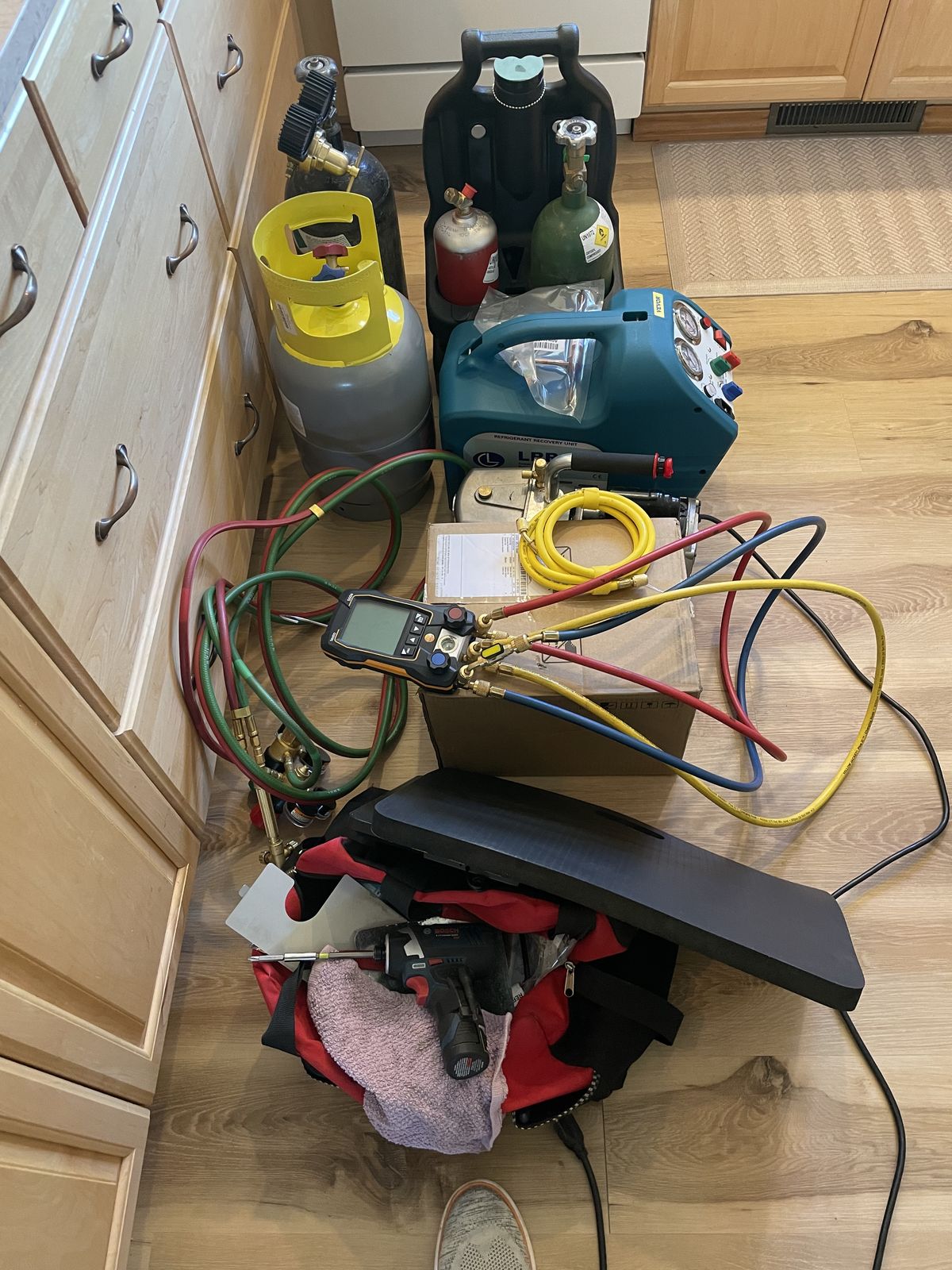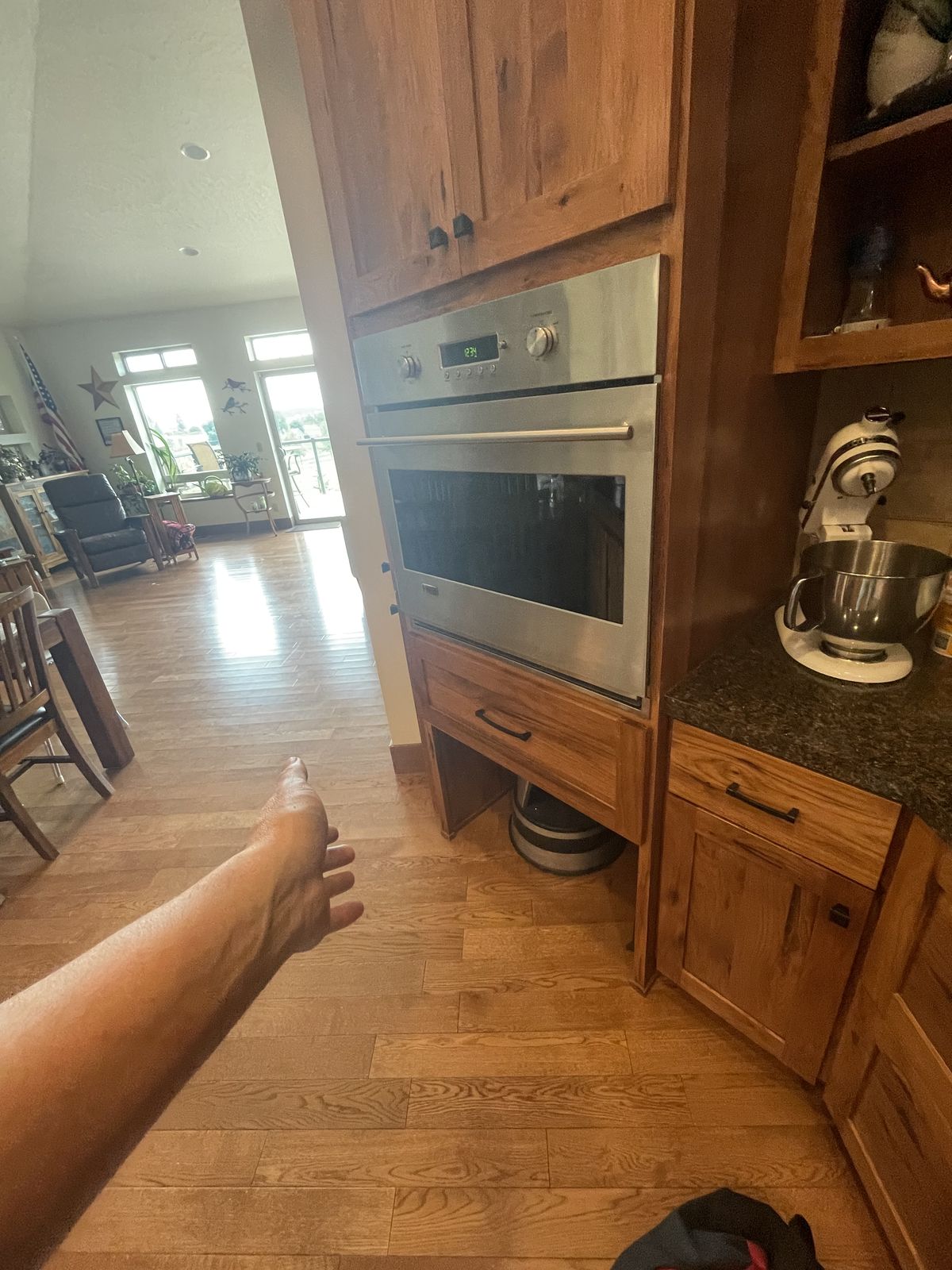
The oven says 350. The cookies say otherwise. Temperature complaints are the politest appliance failure — nothing floods, nothing sparks — but they quietly ruin dinners for months before anyone calls. The good news: an oven that bakes wrong is measuring or making heat wrong, and both paths are short.
Measuring wrong: the sensor
Modern ovens read a thin temperature sensor probe poking from the back wall. As sensors age, their resistance drifts — the oven honestly believes it's at 350 while your thermometer reads 310 or 390. The test is simple: an oven thermometer (or better, our thermocouple) parked mid-cavity through a full preheat-plus-20-minutes. A consistent offset of 25°F+ convicts the sensor — an affordable part — or earns the calibration trick below. Wild swings instead of a steady offset point at the control relay side.
Making heat wrong: elements and igniters
Electric: a bake element doesn't always fail outright — it can develop weak sections that heat unevenly (visible as dim patches when glowing, or blistered spots when cold), giving you scorched-back, raw-front bakes. Broil elements do the same for top-down browning. Gas: a weakening igniter takes longer each month to open the valve, so the oven undershoots and recovers slowly — the classic "everything takes 15 minutes longer than the recipe" report. All are meter-testable, van-stocked repairs.
Leaking heat: the door
A worn door gasket or sagging hinges bleed heat at the frame — the front of the cavity runs cool, bakes brown at the back first, and the kitchen smells like dinner faster than dinner cooks. Run a hand (carefully) around a preheated door edge; warm drafts name the spot. Gaskets and hinges are routine parts, and on Portland's beloved older wall ovens they're often the entire cure.
The calibration secret
Most ovens hide a user-adjustable offset (±35°F, typically via the control panel — the manual or model number unlocks the ritual). If your oven runs a consistent 15–25 degrees off with a healthy sensor, the offset is a legitimate, free fix — and we set it as the finishing step of every temperature repair, verified against our thermocouple, so 350 finally means 350.
The visit
We measure before we replace — cavity temperature over time, sensor resistance against spec, element draw — and quote fixed once the guilty part is named. Bring us the model number and the symptom ("hot," "cold," "uneven," "slow") when you book, and there's a good chance the part rides along on the first trip.