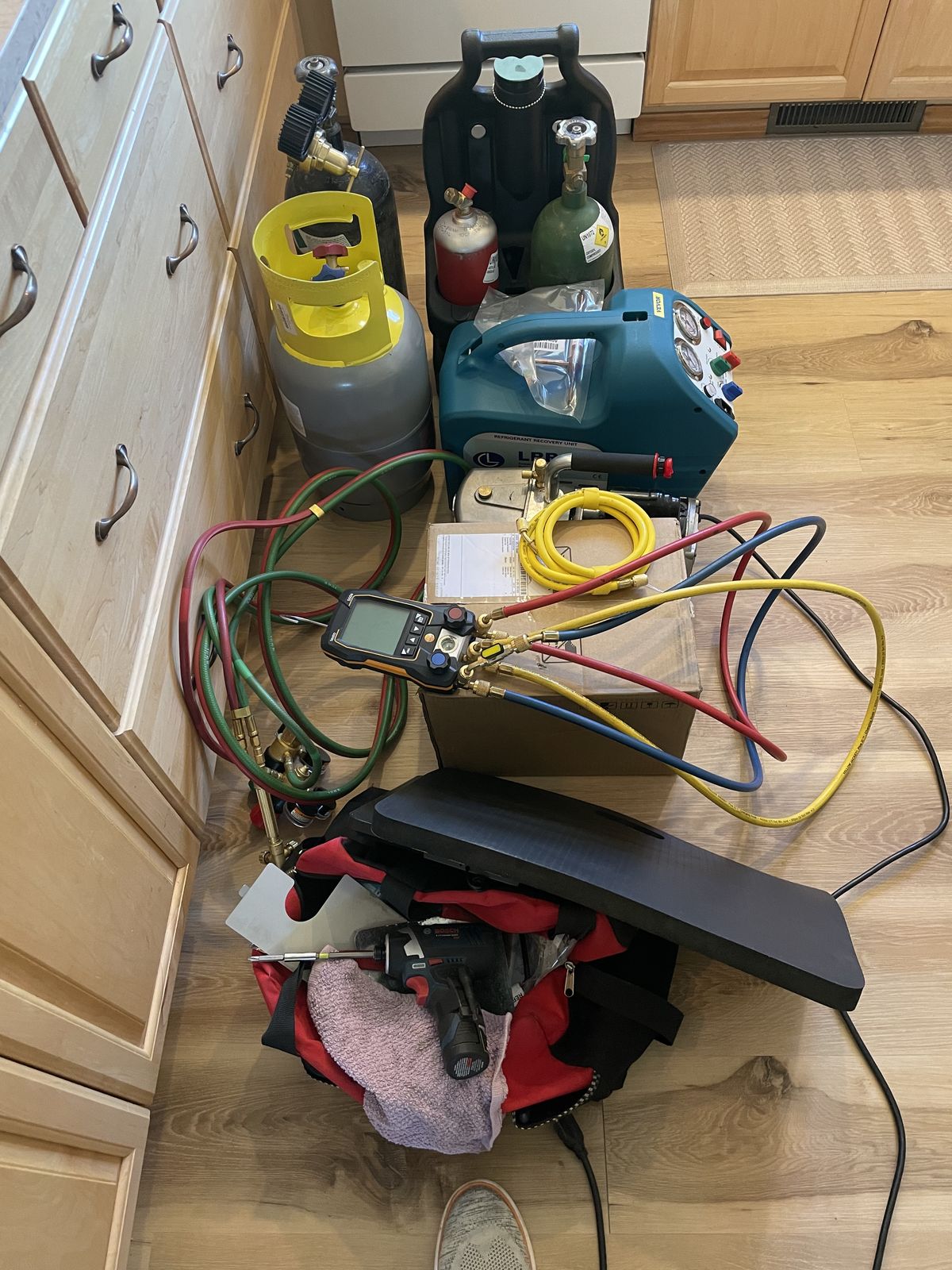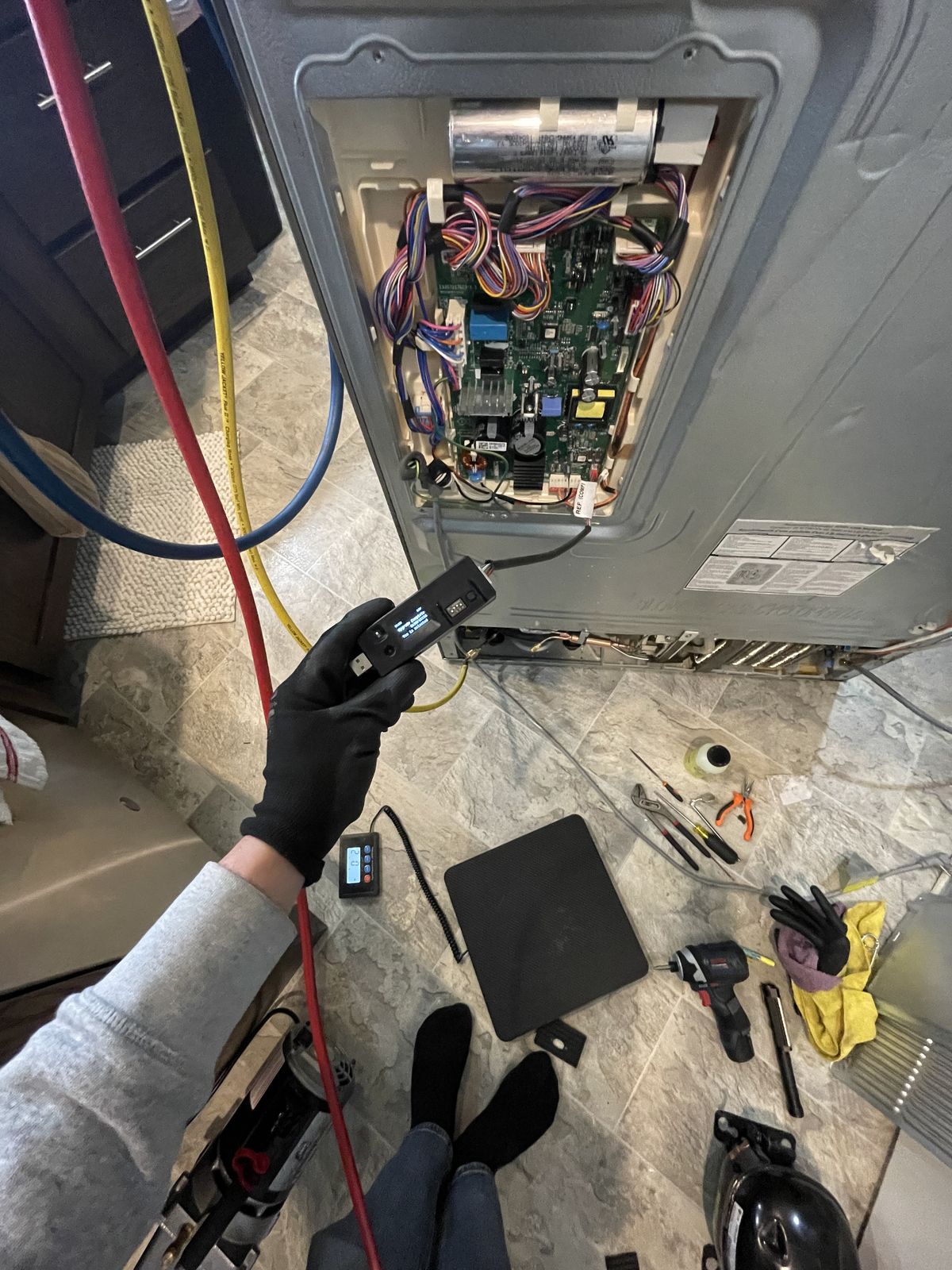
Every time a winter storm or a heat-event brownout rolls through the Portland grid, our phone follows a predictable script two days later: "the power came back, but the fridge never did." Outages don't just pause refrigerators — the restart is a genuine stress event, and it reliably finishes off components that were quietly failing already. Here's what actually happens and what to do in the first hours.
Why the restart is the dangerous part
When power returns, every compressor on the block tries to start at once — often into a grid that's still sagging. A compressor that was starting to wear draws its hardest current at that exact moment, and two small parts take the hit: the start relay/overload on the compressor (listen for a click every few minutes — that's it trying and tripping) and, on inverter models common in newer Portland kitchens, the main control board, whose relays and capacitors absorb the voltage swings. On LG and Samsung units with inverter compressors we also see the compressor itself pushed over the edge — it was limping, and the hard restart was the last straw.
The first-hour checklist
Give it 30–60 minutes of uninterrupted power before judging — some electronic models sit in a protective delay after an outage. Check the breaker (half-tripped double breakers are real), check that the outlet is live (plug in a phone charger), listen for the compressor hum and any clicking, and confirm the display isn't in a demo/showroom mode — a surprising number of fridges land there after power blips. If the lights are on, the compressor is silent or clicking, and an hour has passed: stop waiting, start the food triage.
The food clock, honestly
A closed refrigerator holds safe temperature for roughly 4 hours; a full freezer, 24–48. Past that, a cooler with ice buys time. This is why we run post-outage cooling calls as same-day priority across the Portland metro — the repair itself is often quick (relays and boards are stocked parts), but only if it happens before the freezer surrenders.
What the repair usually is
In order of frequency after outages: the start relay/overload (inexpensive, minutes), the control board (moderate, same visit if stocked), a compressor that now tests failed (the honest conversation — on units under warranty age or premium models, still frequently worth it), and occasionally a thermostat or sensor knocked out of calibration. We test in that order with a meter, so you never pay for the expensive guess.
One prevention habit
If your neighborhood loses power every storm season — and much of the metro's tree-lined east side does — unplug the fridge during the outage and plug it back in 10 minutes after power stabilizes. You'll skip the brownout restart entirely, and your compressor will thank you for years.