Before an ice maker quits, it usually spends months leaving you notes — written in the cubes themselves. Learn to read them and you'll catch the failure while it's still a cheap one. Here's the field guide we use, cube by cube.
Small, hollow, or crescent-shaped cubes: starved fill
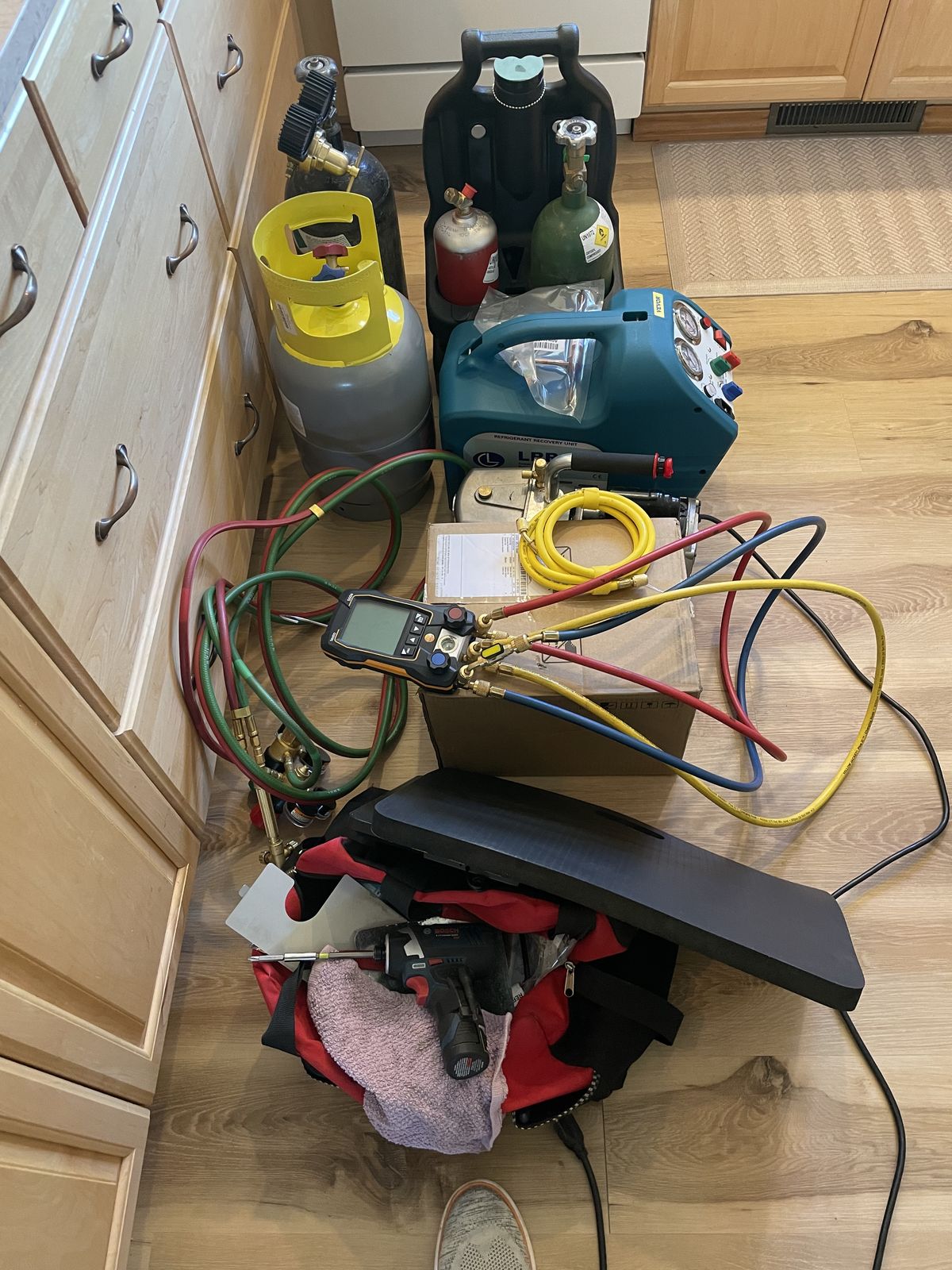
The mold isn't getting its full pour, so cubes freeze thin-walled and collapse into shells and slivers. The starvation chain, upstream to down: a water filter past its six-month life (the leading cause by a wide margin), a fill valve too tired to open fully, low house pressure at the fridge, or a partially frozen fill tube narrowing the pipe. One local wrinkle we see across the Portland metro: kitchens with reverse-osmosis systems teed into the fridge line often run at the bare minimum pressure spec — a filter at 70% life is enough to tip them into crescent territory. A pressure reading at the fridge is part of an honest diagnosis, not an upsell.
Cloudy cubes: mostly physics, sometimes the filter
Home ice freezes from the outside in, pushing dissolved air and minerals to the center — that white cloudy core is normal and appears in every home ice maker on earth (clear ice requires the directional freezing that fancy countertop machines do). What's not normal: cubes with visible white flecks, gray tint, or off-taste. That's the filter announcing retirement, a long-idle machine that needs its first few harvests discarded, or mineral scale in the mold — rare on our soft Bull Run water, worth checking on well systems outside the city.
Cubes welded into a berg: melt-and-refreeze
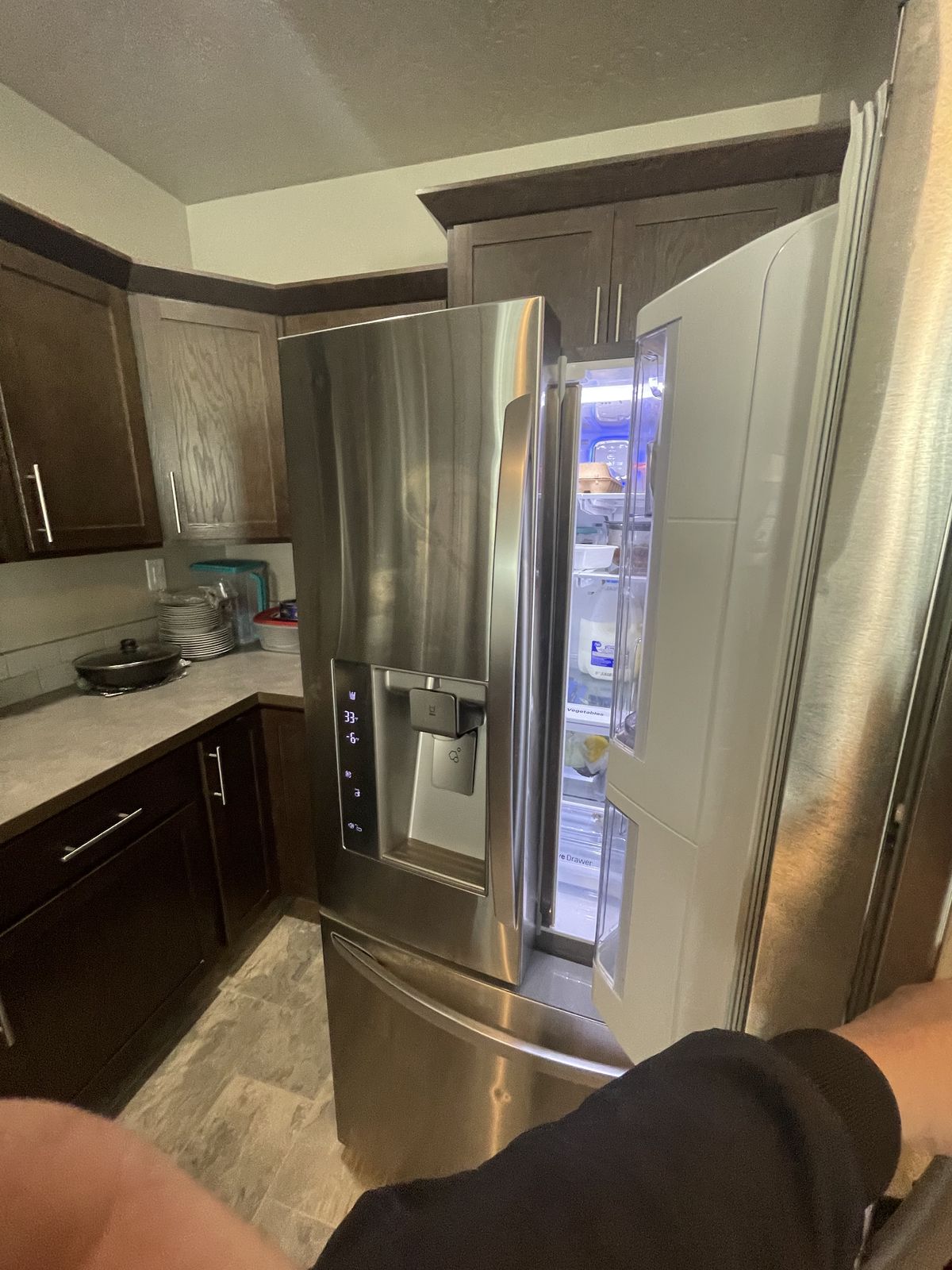
A solid block in the bin means partial melting between freezes: slow household ice use letting the pile age, a freezer cycling warm (dusty coils, tired gasket), or on in-door ice systems a compartment seal leaking humid air. If the bin needs an ice pick weekly, the machine is asking for a cooling and seal check, not a bigger hammer.
Off-taste that won't quit
Stale-tasting ice after a filter change and a few discarded harvests points at the bin absorbing freezer odors (an open baking-soda box helps), aging water lines, or food packaging perfuming the compartment. Persistent chemical or metallic taste earns a professional look at the line and valve.
The point of reading the notes
Every one of these signatures is the cheap early chapter of a story that ends in "no ice at all." Filters, valves and seals are modest, same-visit repairs; catch them at the crescent-cube stage and you'll never meet the empty-bin stage. Fixed quote after the meter and the pressure gauge weigh in — and yes, we read the cubes first.