"It still works… it just takes forever." A dryer that needs two runs for a load of towels isn't broken the way a dead dryer is broken — but it's burning double the electricity, double the machine wear, and an hour of your evening, every load. The counterintuitive field truth: the heater is almost never weak. Heating elements work or they don't. Slow drying is an airflow story.
How a dryer actually dries
Heat doesn't dry clothes; moving air does. The heater warms air, the blower pushes it through the tumbling load, and the wet air must escape out the vent. Choke that exit anywhere and the drum becomes a sauna — clothes get hot and stay damp, moisture sensors read wet, cycles stretch. So the diagnosis is a hunt for the choke point, back to front.
The usual choke points, in order
The lint screen — even a clean-looking one develops an invisible film from dryer sheets; if water pools on it instead of draining through, wash it with dish soap. The transition hose behind the machine — crushed flat when the dryer got pushed against the wall, or sagging with a lint-and-moisture belly. The vent run itself — the main event. Our region's damp air keeps lint tacky, so it coats duct walls instead of blowing clear, and the long, elbow-heavy runs in Portland's older bungalows and basement laundries (where the vent may travel half the house to reach daylight) give it years of surface to colonize. And the exterior flap, painted shut, screened over, or nested in by an enterprising bird.
The one measurement that settles it
Go outside during a cycle and feel the exhaust at the vent hood: it should push hard, warm, and flap the damper confidently. A limp, lukewarm breeze is your answer. On every slow-dry call we take that reading with an actual gauge before and after the fix — the number turns an argument into a receipt.
When a part really is guilty
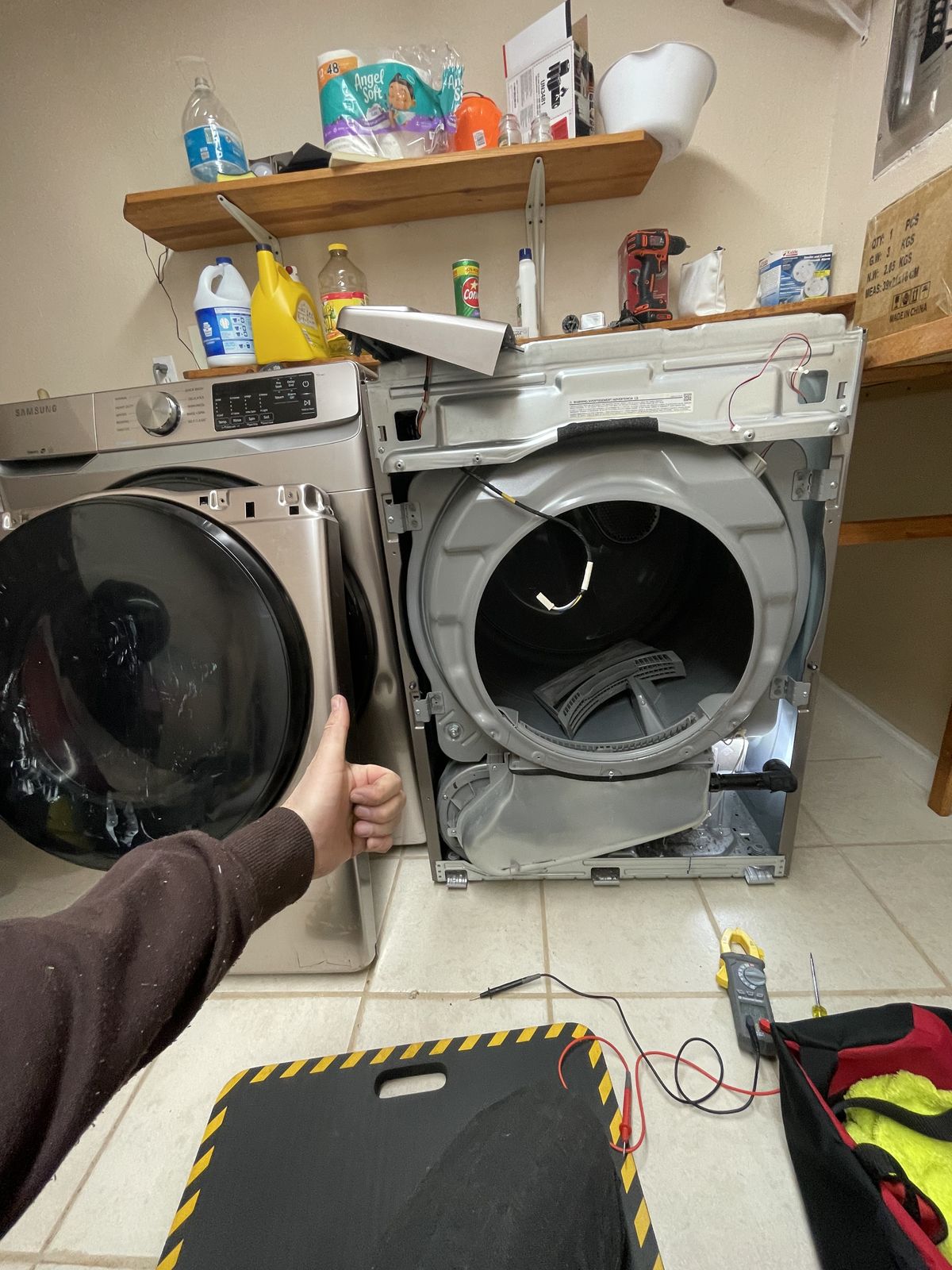
A blower wheel cracked or packed with a stray sock, a moisture sensor filmed over by years of dryer sheets (wipe the two metal bars inside the drum with rubbing alcohol — free fix), a cycling thermostat cutting heat early — all real, all findable with a meter, all secondary to airflow in frequency. And the safety footnote that deserves its own sentence: a restricted dryer vent isn't just slow, it's the leading cause of dryer fires — which is why we treat this "minor" complaint with disproportionate respect.